About Dr. Navneet Sahota
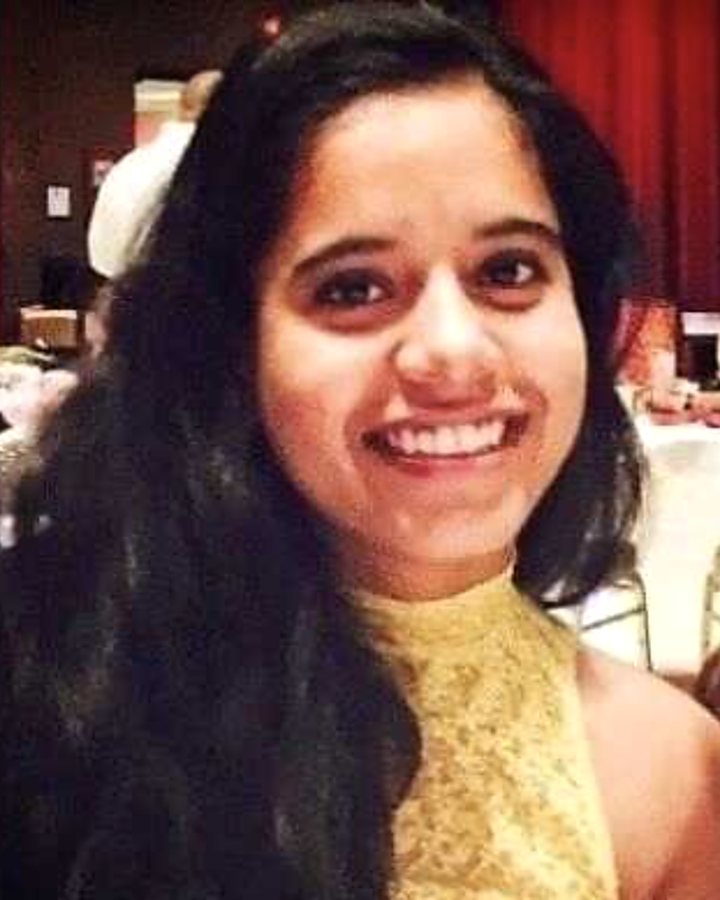
Dr. Navneet Sahota holds a Ph.D. in Analytical Chemistry from Indiana University Bloomington and an M.S. in Organic Chemistry from Illinois State University. She has taught chemistry since 2014 — as an Assistant Professor, as a graduate teaching assistant, and for nearly four years as an Associate Instructor teaching undergraduate chemistry at Indiana University. She began tutoring in Fremont in 2024.
Education
- Ph.D., Analytical Chemistry — Indiana University Bloomington, 2017–2021
- M.S., Organic Chemistry — Illinois State University, 2015–2017; nominated for the Best Thesis Award
University teaching
This is the part that matters most for an AP student, and it is the part most tutoring profiles cannot claim. AP Chemistry is a rehearsal for college general chemistry. Dr. Sahota has taught that course, set its work and graded it.
| Role | Institution | Dates | Taught |
|---|---|---|---|
| Associate Instructor | Indiana University Bloomington | Sep 2017 – May 2021 | Undergraduate chemistry |
| Graduate Teaching Assistant | Illinois State University | Aug 2015 – May 2016 | General, physical and organic chemistry |
| Assistant Professor | BBK DAV College for Women, Amritsar | Jul 2014 – Jul 2015 | General & organic chemistry, electrochemistry, spectroscopy, biochemistry |
| Visiting Lecturer | Guru Nanak Dev University | Feb 2023 | — |
She also mentored undergraduates and incoming teaching assistants during the Ph.D.
Research
Visiting Research Scientist at Northwestern University in 2019, and Graduate Research Assistant at Indiana University. Her field was mass spectrometry, microdroplet chemistry and real-time reaction monitoring, with three publications including papers in Chemical Science (Royal Society of Chemistry, 2019) and the Journal of Organic Chemistry (American Chemical Society, 2017). She holds the Robert & Marjorie Mann Fellowship from Indiana University (2020), one of ten honours.
The research is credibility rather than the pitch. What it means in a session is that she has spent years being wrong about hard problems and working out why — which is exactly the skill a struggling student needs modelled.
Why she tutors
Teaching was always the part of academia she wanted, and she did a great deal of it during the Ph.D. Tutoring in Fremont is that same work — one student at a time rather than a lecture hall of two hundred.
How she teaches
The approach is diagnostic rather than remedial. Re-explaining a chapter more slowly rarely helps a struggling chemistry student, because the misunderstanding is usually further back than the chapter they are failing. Sessions start by finding which foundation is missing — almost always mole reasoning, unit tracking, or problem interpretation — and rebuild that while keeping pace with the current course.
Parents get honest reporting, including the unwelcome version: if a student no longer needs weekly tutoring, they will be told.
Who she works with
- High school students in AP Chemistry
- Students in Honors and regular chemistry
- College and pre-med general chemistry students
- Students in the Fremont semester group classes
- Students who need biology or earth science support
Schools her students come from
Mission San Jose, American, Irvington, Washington, Milpitas, James Logan, Monta Vista and Gunn, among others — as well as college students in general chemistry sequences.
Where and when
In person across Fremont and the Tri-City area — Union City, Newark, Milpitas, Hayward — plus Santa Clara and San Jose, and online anywhere in the United States. Hours are 11:00 AM – 7:00 PM, seven days a week.